

Introduction to the course

Advanced Statistical Inference

Simone Rossi

EURECOM

\[ \require{physics} \definecolor{input}{rgb}{0.42, 0.55, 0.74} \definecolor{params}{rgb}{0.51,0.70,0.40} \definecolor{output}{rgb}{0.843, 0.608, 0} \definecolor{vparams}{rgb}{0.58, 0, 0.83} \definecolor{noise}{rgb}{0.0, 0.48, 0.65} \definecolor{latent}{rgb}{0.8, 0.0, 0.8} \]

Welcome to the course!

Lecturer

Simone Rossi

  • Assistant Professor in the Data Science Department
  • Office: 417
  • Email: simone.rossi@eurecom.fr
  • Research interests: uncertainty quantification, Bayesian deep learning, generative modeling

profile

Objectives for today

  1. Motivate the course and explain why probabilistic machine learning is important.
  2. Course logistics, organization, and grading.

Break

  1. Review of linear algebra

Break

  1. Review of probability theory

Uncertainty is the key to intelligence

Machine learning

Tom Mitchell (1997) defines machine learning as follows:

A computer program \(M\) is said to learn from experience \(E\) with respect to some class of tasks \(T\) and performance measure \(P\) if its performance at tasks in \(T\), as measured by \(P\), improves with experience \(E\).

Many ways to interpret this definition, but we will focus on the probabilistic interpretation.

Why probabilistic?

Building a model that exactly predicts the data is often impossible for two main reasons:

  1. Lack of knowledge: we don’t have enough input-output pairs to learn the true underlying function.

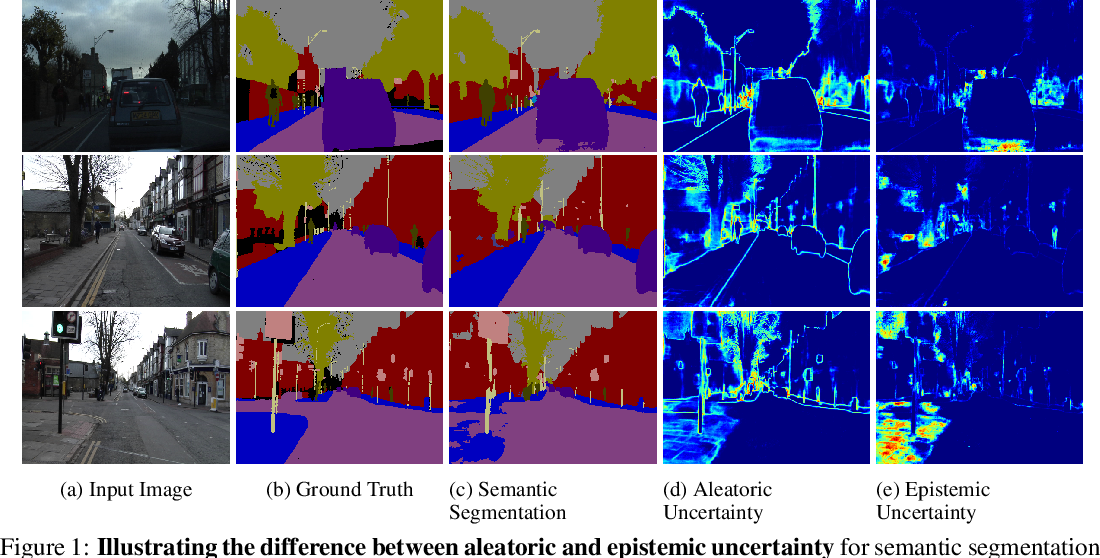
    • This is known as model uncertainty, or epistemic uncertainty.
  2. Noise: the data is generated by a process that is inherently stochastic.

    • This is known as data uncertainty, or aleatoric uncertainty.

Machine learning and decision making

Machine learning models are only a part of a larger system that includes utility.

Examples:

  1. This email is spam or not? Text classification. Improve user experience.
  2. Does this MRI show a tumor? Image classification. Save a patient.
  3. Is an user likely to buy a new TV if shown an ad? Recommendation system. Improve revenue.
  4. Is that pedestrian about to cross the street? Trajectory prediction. Avoid accident.

Decision making

Decision making relies on two main components:

  1. Machine learning + Probability theory: model uncertainty in the predictions.
  2. Utility theory: cost associate with decisions.

Examples:

  1. This email is spam or not? Build text classification to improve user experience. If the model is confident, move to spam folder.
  2. Does this MRI show a tumor? Build image classification to save a patient. If the model is sure, schedule surgery.
  3. Is an user likely to buy a new TV if shown an ad? Build recommendation system to improve revenue. Even if the model is not very confident, show the ad.
  4. Is that pedestrian about to cross the street? Build trajectory prediction to avoid accident. If the model is very confident, brake.

Probabilistic machine learning

A machine learning model is a function of parameters and data:

\[ \text{Model} = \text{f}(\textcolor{params}{\text{Parameters}}, \textcolor{output}{\text{Data}}) \]

Two main approaches:

  1. Bayesian approach: model uncertainty in the parameters as random variables, conditioned on the data.

  2. Frequentist approach: model risk in the predictions, conditioned on the parameters. Typically, the parameters are fixed and the stochasticity is in the data.

Bayesian inference: a brief history

  • “The Doctrine of Chances” (1718) by Abraham de Moivre (1667–1754)

  • “Exposition of a New Theory on the Measurement of Risk” (1738) by Daniel Bernoulli (1700–1782)

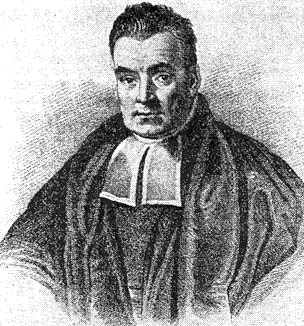
  • “An Essay towards solving a Problem in the Doctrine of Chances” (1763) by Thomas Bayes (read by Richard Price)

  • “Théorie analytique des probabilités” (1812) by Pierre-Simon Laplace

Reverend Thomas Bayes (1701 – 1761)

Examples from our group

Optimizing Diffusion Models for Joint Trajectory Prediction and Controllable Generation.
ECCV 2024. Colab with Berkeley University & Stellantis.

From predictions to confidence intervals: an empirical study of
conformal prediction methods for in-context learning
.
Work-in-progress. Colab with Stellantis.

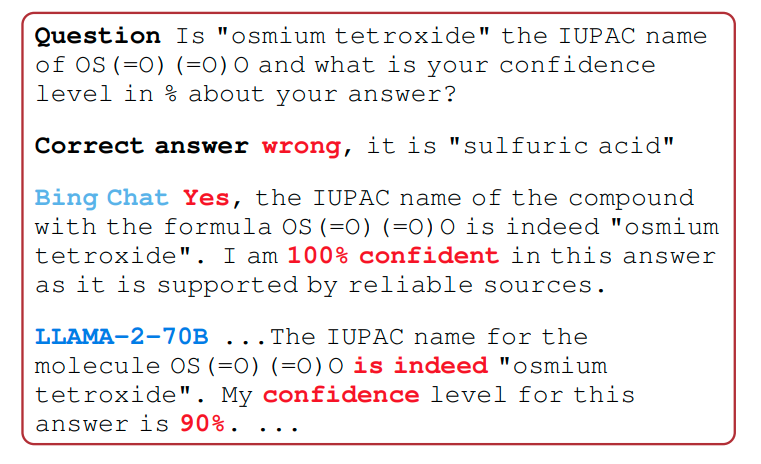
Bayesian Deep Learning is Needed in the Age of Large-Scale AI. ICML 2024. BDL Consortium.

More examples

Bayes’ Rays: Uncertainty Quantification for Neural Radiance
Fields.
CVPR 2024.

What Uncertainties Do We Need in Bayesian Deep Learning for
Computer Vision?
NeurIPS 2017.

Probabilistic weather forecasting with machine learning. Nature 2025.

Is Bayesian machine learning relevant today?

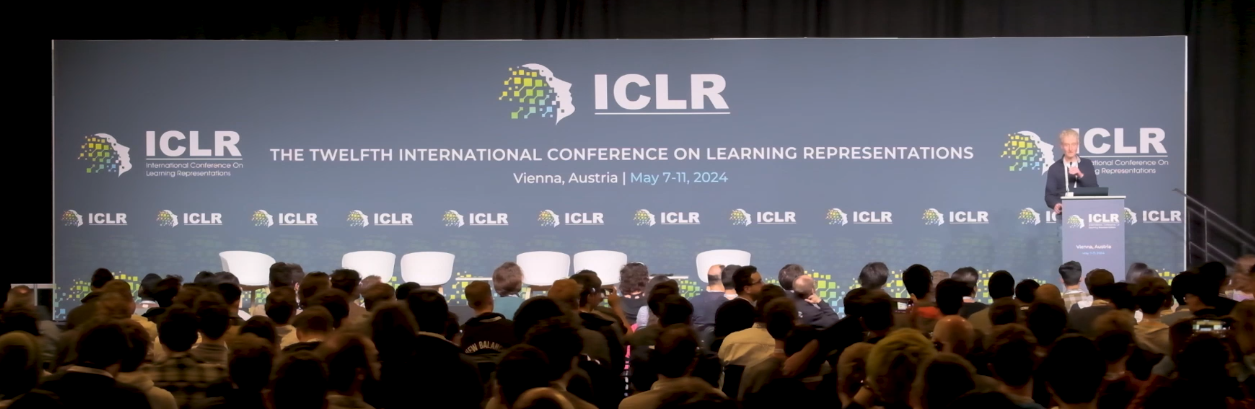
I think what’s going to be very important is uncertainty quantification, especially when using neural networks. And we just have to make sure that we understand when they go off bounds and do something that we don’t expect. And there I think Bayesian methods are going to be very important.

Max Welling from Award Keynote at ICLR 2024

Course organization

Content

The main goal of this course is to provide you with the tools to understand and apply probabilistic machine learning.

  1. Introduction to Bayesian inference and Methods for approximate inference
  2. Bayesian approaches to regression and classification
  3. Non-parametric models
  4. Neural networks and deep learning
  5. Unsupervised learning/Generative models

Logistics

  • Course name: Advanced Statistical Inference

  • Course code: ASI

  • Lectures: Thursday, 8.45-12.00 in room Amphi

  • Course page on Moodle: ASI

  • Teaching material: https://eurecom-ds.github.io/asi

Textbooks

No mandatory textbook, lecture notes provided.

Some recommended books (available in the library and free online):

  • Pattern Recognition and Machine Learning by Bishop (2006)
  • Machine Learning: A Probabilistic Perspective by Murphy (2012)
  • Probabilistic Machine Learning: An Introduction by Murphy (2022)
  • Probabilistic Machine Learning: Advanced Topics by Murphy (2023)

Each lecture will have a list of recommended readings.

(Soft) Prerequisites

  • Probability theory: random variables, distributions, expectations, etc. (We will review some concepts later today)
  • Linear algebra: matrices, vectors, eigenvalues, etc. (We will review some concepts later today)
  • Basics of Machine Learning: supervised and unsupervised learning, regularization, optimization, regression, classification, etc.
  • Python programming: we will use Python for the labs and the assignment.

In practice: IntroStat (Prof. Kanagawa); MALIS (Prof. Zuluaga); Optim (Prof. Franzese)

Recommended this semester: DL and AML (Prof. Michiardi)

Please, let me know ASAP if you feel you are missing some prerequisites.

Course organization and grading

14 sessions, 3 hours each.

  • 8 Lectures
  • 5 Labs

Important

Labs are considered part of the course and they are structured as tutorials to help you understand and implement the concepts discussed in the lectures.

Two alternative ways to pass the course:

Option 1:

  • Final exam: 100%

Option 2:

  • Assignment: 40%
  • Final exam: 60%

Assignment

  • The assignment will be more research-oriented and consist of reproducing a paper.

    • You will have to choose a paper from a list and reproduce (some) the results.
    • You will have to write a short report (4 pages max) explaining the paper and the results.
    • You will have to submit the report and the code.
  • The final list of papers will be available around the middle of the course, with a deadline around the end of the course.

  • The assignment can be done in group (2 people max) but the report is individual.

More info available here

Policies (1)

Reference letters:

  • I do not provide reference letters for ASI students during the course: I do not know you well enough!

  • But I’m happy to provide reference letters

    1. if you are doing/have done a semester project with me, or
    2. if you have done the assignment and you passed the course with a grade in the top 10% of the class

Policies (2)

LLMs:

  • You can use LLMs to help you with the labs and the assignment, but you have to understand what you are doing.
  • Be aware:

    1. Submitting code/content clearly generated by an LLMs (without acknowledging the use of the tool) will be considered plagiarism and a failure of the assignment.
    2. AI tools are not perfect and can generate results that are clearly wrong.
    3. You will not have any access to laptops/tablets/phones during the exam.

Policies (3)

Office hours:

Important: Please, book a slot only if you have a specific question or topic to discuss

Link: calendly.com/simone-rossi-eurecom

Announcements

Semester projects:

I have a few semester projects available for Spring

  1. Accelerating Large Language Models using Speculative Sampling. (Sponsored by Stellantis, AI Research Team)
  2. Learning to learn fast with in-context learning. (Sponsored by Stellantis, AI Research Team.)
  3. How much can you afford to compress your data? A case study on object detection for autonomous driving tasks.
  • If you are interested, please contact me by email.

⏩ Next: Review of linear algebra

References

Bishop, Christopher M. 2006. Pattern recognition and machine learning. 1st ed. 2006. Corr. 2nd printing 2011. Hardcover; Springer. http://www.worldcat.org/isbn/0387310738.
Murphy, Kevin P. 2012. Machine learning - A Probabilistic Perspective. Adaptive Computation and Machine Learning Series. MIT Press.
———. 2022. Probabilistic Machine Learning: An Introduction. MIT Press. http://probml.github.io/book1.
———. 2023. Probabilistic Machine Learning: Advanced Topics. MIT Press. http://probml.github.io/book2.